Southern Restaurant Must-Haves for an Authentic Menu
A memorable Southern restaurant does not begin with a sign, a porch, or a playlist. It begins with the menu, and more specifically, with the choices behind the menu. Guests can tell when a concept was built from lived understanding and when it was assembled from shorthand. A plate of fried chicken and a side of mac and cheese might check a box, but authenticity in Southern food runs deeper than a few familiar dishes.
The best Southern menus feel rooted. They carry a sense of place, whether that place is coastal South Carolina, the Mississippi Delta, East Texas, Appalachia, or the Gulf Coast. They respect tradition without freezing it in amber. They understand that Southern cooking is generous, but also disciplined. Good seasoning, proper texture, careful frying, long simmering, balanced acidity, and smart sourcing matter just as much as nostalgia.
If you are building or refining a Southern restaurant menu, the goal is not to include every classic ever served below the Mason-Dixon line. That approach usually leads to a bloated menu, uneven execution, and a kitchen that struggles during service. The stronger move is to choose the dishes that define your perspective, then execute them with consistency and conviction.
Authenticity starts with regional honesty
One of the quickest ways a Southern menu loses credibility is by flattening the South into one interchangeable cuisine. Southern food is not a monolith. Lowcountry cooking does not taste like West Tennessee barbecue. Cajun food is not the same as the food traditions of Alabama or Virginia. Even within one state, the differences can be dramatic.
A thoughtful Southern restaurant makes those distinctions clear. If the kitchen leans toward the Carolinas, guests should see signs of that in the menu language and in the pantry: rice, field peas, seafood, benne, okra, vinegar brightness. If the influence is more Deep South and inland, there may be stronger emphasis on braised greens, smoked meats, cornbread, catfish, and beans cooked low and slow. A restaurant does not need to serve only one region’s food, but it should know what it is saying.
That kind of clarity helps with everything else. It guides purchasing. It shapes specials. It lets staff tell a coherent story at the table. It also keeps the menu from feeling like a greatest-hits album assembled by committee. Diners may not use the phrase regional honesty, but they recognize it when a menu feels grounded instead of borrowed.
The backbone dishes every Southern menu should consider
Certain categories are so central to Southern dining that leaving them out requires a deliberate reason. That does not mean every restaurant needs all of them, but most successful Southern menus draw from this foundation.
- Fried chicken or another signature fried centerpiece
- Slow-cooked vegetables and legumes, especially greens or beans
- A bread offering such as biscuits, cornbread, or hoe cakes
- One seafood staple, depending on region and sourcing
- A dessert that reflects Southern baking traditions
The key word is signature. Plenty of restaurants serve fried chicken. Fewer serve chicken with a crust that stays crisp through the rush, seasoned flour that tastes like something on its own, and juicy meat from breast to thigh. The same principle applies across the menu. A Southern restaurant needs dishes that feel practiced, not symbolic.
Fried chicken is more technical than people admit
Few dishes carry the weight of expectation that fried chicken does. Guests order it with a complete mental picture already in place. They expect deeply seasoned meat, a crust with real texture, and no grease puddled on the plate. If any part misses, the whole impression slips.
This is where many operators underestimate the work. Great fried chicken depends on decisions made well before the fryer. Brining or pre-seasoning changes everything. So does flour composition. Some kitchens swear by a straightforward seasoned flour; others blend in starches for extra shatter. Fry temperature, resting time, batch size, and holding method all affect the final product. Even the bird size matters. Smaller chickens often cook more evenly and retain tenderness better, though yield calculations can complicate that choice.
A Southern restaurant that plans to feature fried chicken should engineer service around it. That may mean par-frying and finishing, limiting modifications, or building a prep schedule that protects consistency during peak volume. There is no romance in sending out ten-minute-late chicken with a soggy crust. Guests may forgive a wait if they know the dish is cooked to order, but they will not forgive carelessness.
Catfish can fill a similar role in some markets, especially where seafood traditions run strong. Properly seasoned cornmeal crust, clean oil, and a squeeze of acid at the end can deliver the same kind of comfort and confidence. The broader point is this: at least one fried item should be so good that regulars measure the restaurant against it every time.
Biscuits are small, but they carry the whole house
If I walk into a Southern restaurant and see biscuits on the menu, I know within one bite how serious the kitchen is. Biscuits expose a lot. They show whether the kitchen understands dough temperature, flour strength, fat handling, and restraint. They also reveal whether management is willing to invest labor into an item that is often underpriced and deeply judged.
A great biscuit should not be an afterthought dropped into a basket because the genre requires one. It needs walterspgh.com Southern restaurant height, tenderness, and a crust with a touch of color. It should split cleanly by hand, steam lightly when opened, and taste good before anyone adds butter, preserves, or gravy. Too many restaurants lean on toppings to rescue a dry interior. Guests notice.
Cornbread raises a different set of expectations. Some guests want it sweet, others would call sweetness a betrayal. Cast-iron edges matter to some diners. Others care more about crumb and moisture. The smartest approach is to choose a style and own it. Trying to satisfy every camp usually produces cornbread that pleases none of them.
Bread service also creates a practical opportunity. It sets tone at the table, buys the kitchen a little time, and increases perceived hospitality when done well. A basket of hot biscuits with whipped sorghum butter can say more about a Southern restaurant than a page of branding language ever will.
Vegetables and beans separate true Southern cooking from imitation
A menu can have smoked meats, fried food, and pie, but if the vegetables feel like filler, the Southern identity starts to look cosmetic. Southern cooking has always made serious use of vegetables, peas, beans, and greens, both from necessity and from skill. These dishes are not there to offset indulgence. They are central to the table.
Collard greens, mustard greens, or turnip greens need time and judgment. The potlikker should taste seasoned and full, not muddy or salty. Texture matters too. Greens should be tender without turning lifeless. Braising liquid should have depth, often from smoked pork, onion, chile, vinegar, or all of the above, but there are strong meatless versions as well if a kitchen takes them seriously.
Field peas, butter beans, black-eyed peas, and lima beans deserve equal attention. When cooked properly, they bring body and comfort that no quick side dish can fake. The same is true for succotash, stewed okra and tomatoes, or buttered corn when it is treated with respect. These dishes often cost less in raw product than center-of-plate proteins, yet they can drive repeat business because they feel like someone in the kitchen actually cared.
Mac and cheese deserves a brief word here because it appears on nearly every Southern-leaning menu now. It is popular, but popularity alone does not make it authentic or necessary. If it is there, it should have a clear identity. Baked and structured, or creamy and spoonable. Sharp cheddar forward, or a blended cheese sauce with more subtlety. Breadcrumb crust or no crust. There is room for variation, but not for indecision.
Seafood belongs on many Southern menus, but only when it makes sense
A coastal Southern restaurant without strong seafood is missing a major part of its heritage. Inland concepts have more flexibility, but even they often benefit from a well-chosen seafood dish. Shrimp and grits remains the obvious example, though it is also one of the most abused dishes in the category.
At its best, shrimp and grits balances sweetness from shellfish, richness from sauce or stock, and the grounded comfort of properly cooked grits. At its worst, it arrives as rubbery shrimp over bland porridge. The grits matter every bit as much as the shrimp. Stone-ground grits take longer and require attention, but they carry flavor and texture that instant versions simply do not. That difference is visible on the plate and obvious in the mouth.
Oysters, crab cakes, fried shrimp, trout, redfish, or gumbo may fit depending on geography and sourcing. The caution is simple: do not chase a seafood identity your supply chain cannot support. A Southern restaurant earns more trust serving one excellent local fish dish than a broad seafood section built on frozen compromise.
The same logic applies to grits themselves. If they appear on the menu at breakfast, lunch, and dinner, each application should feel intentional. Cheese grits under a braised short rib can work. So can plain buttery grits beside eggs. What does not work is using grits as a generic “Southern” placeholder with no thought to seasoning, consistency, or accompaniment.
Smoke, pork, and patience still matter
You cannot talk about Southern menus for long without talking about pork. It shows up everywhere, in obvious forms like ribs and pulled pork, and in quieter ways through sausage, ham hocks, bacon, country ham, tasso, and drippings used to flavor vegetables or gravies.
For many guests, barbecue is the anchor dish that defines whether a Southern restaurant feels legitimate. That creates a challenge. True barbecue is labor-intensive, equipment-dependent, and unforgiving. If a restaurant cannot commit to the process, it should think carefully before placing smoked meats at the center of the menu.
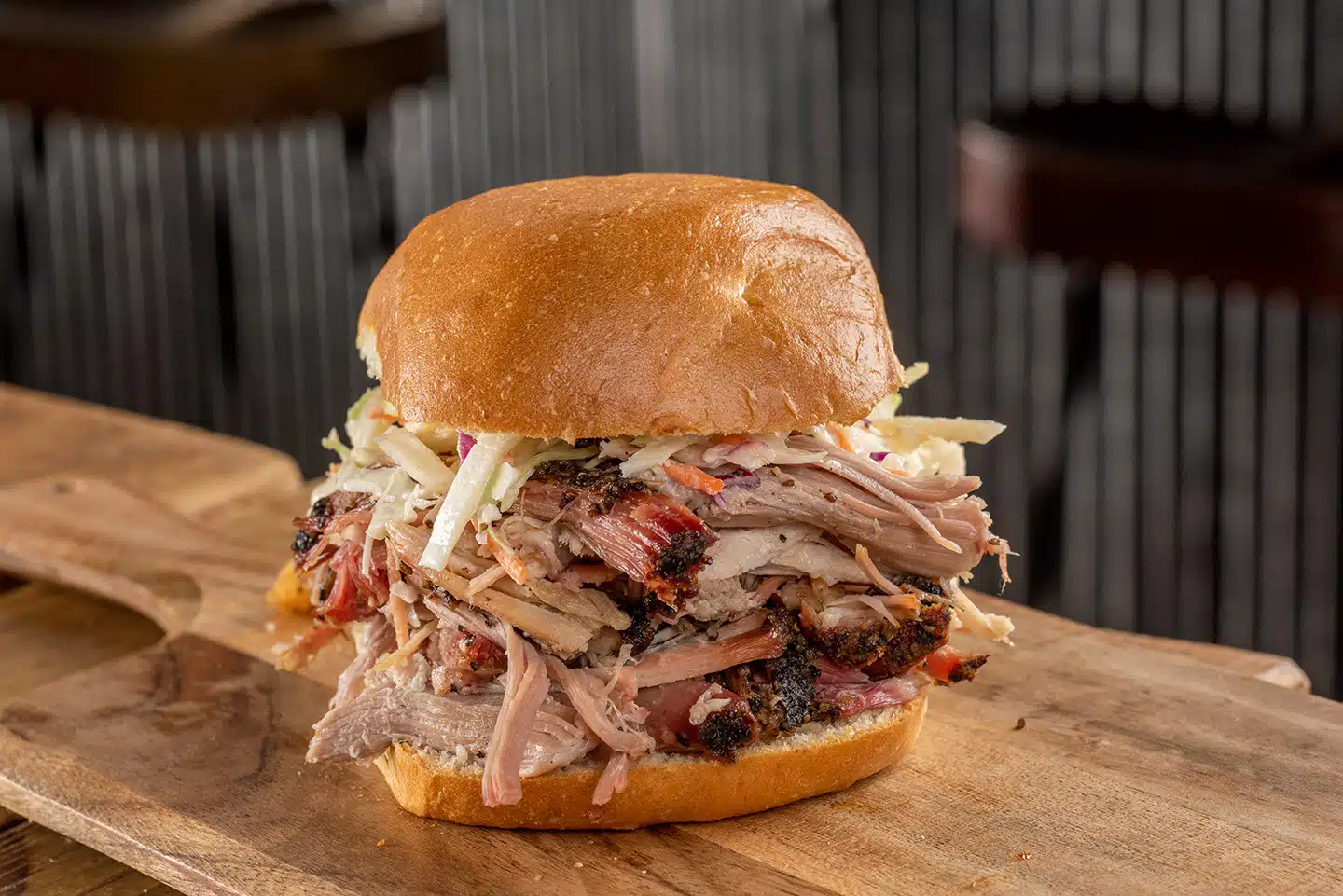
There is no shame in restraint. A kitchen might choose one smoked item and do it extremely well. Maybe that is pork shoulder, served on a plate and in a sandwich. Maybe it is smoked turkey or house sausage. Maybe it is ribs available only on weekends when staff and pit capacity can support proper execution. Limiting availability can actually strengthen demand if the product is worth waiting for.
Country ham is another powerful marker of authenticity, especially in breakfast and brunch service. A few thin slices beside eggs and red-eye gravy can carry more regional character than a dozen trend-driven dishes. Because it is salty and assertive, portioning and pairing matter. It does not need much on the plate, just enough to create contrast with biscuit, egg, or grits.
Breakfast can define the restaurant, even if dinner pays more
Southern restaurants often underestimate how important breakfast and brunch are to their identity. For many guests, that is when they encounter the cuisine most intimately. Eggs, biscuits, gravy, grits, pancakes, sausage, fried apples, hash, and country ham form a vocabulary that people know deeply, often from family tables.
That familiarity can be an advantage if the food is good. It can also be dangerous. Diners are less forgiving of bad biscuits at 9 a.m. Than they are of a forgettable appetizer at dinner. Breakfast cooking looks simple on paper, but high-volume brunch service exposes weak systems fast.
A strong Southern breakfast menu does not need dozens of combinations. It needs a few plates with sharp execution. Biscuits and sausage gravy should be peppery and balanced, not gluey. Grits should be hot and smooth, not congealed. Fried chicken and waffles, if offered, should treat both halves of the plate with seriousness. Too often the chicken is decent and the waffle tastes like a rental.
Brunch drinks and sweets may bring margin, but savory breakfast staples usually build loyalty. A guest who trusts your biscuit program comes back for dinner with friends.
Desserts should taste like memory, not just sugar
Southern desserts tend to be generous, but the best ones are not merely sweet. They carry toast, spice, tang, nuttiness, or fruit brightness. They know when to stop. Pecan pie without balance becomes heavy. Banana pudding without contrast becomes flat. Peach cobbler without enough fruit tastes like topping.
A Southern restaurant usually needs at least one dessert that feels non-negotiable. That could be chess pie, hummingbird cake, bread pudding, buttermilk pie, cobbler, or a seasonal fruit crisp with good vanilla ice cream. The style matters less than the conviction behind it.
Banana pudding remains a useful test case. Guests expect comfort, but there is room for house character. Some prefer it loose and spoonable, almost old-fashioned in texture. Others want a more structured version with layers that hold on the plate. Vanilla wafer choice, pudding richness, banana ripeness, and meringue or whipped cream all change the final experience. The wrong move is making it precious. Southern dessert can be elegant, but it should still feel hospitable.
Seasonality matters here more than some operators realize. A peach dessert in peak summer and an apple or sweet potato dessert in cooler months creates freshness without requiring a complete menu reset.
Drinks should support the food, not imitate a stereotype
Beverage programs at a Southern restaurant often drift into clichés. Sweet tea is essential in many markets, but it still needs care. Fresh brewing, proper chilling, and sugar levels that suit the audience are basic expectations. Lemonade, church-style fruit tea, and coffee deserve similar attention because guests order them constantly and notice flaws quickly.
Cocktails should respect the food’s richness. Bourbon belongs naturally on many Southern menus, but a whiskey list alone does not make a beverage program feel regional. Low-proof aperitifs, crisp highballs, citrus-driven drinks, and restrained use of sweetness often pair better with fried food and smoked meats than another heavy old fashioned.
Wine deserves more respect in this category than it often receives. Acidic whites, sparkling wines, rosé, and lighter reds can pair beautifully with Southern cooking. Restaurants that invest in staff training here can surprise guests and increase check average without forcing the issue.
What to leave off the menu
Restraint is one of the least discussed must-haves for an authentic menu. A Southern restaurant should know what not to serve. If a dish appears only because a consultant said it broadens appeal, it usually shows. The same is true for trendy fusion items that dilute the restaurant’s point of view.
A useful filter is operational honesty. Ask whether the kitchen can produce the dish consistently on a full Saturday night, whether the ingredients can be sourced reliably, and whether the plate actually strengthens the restaurant’s identity. If the answer to any of those is no, the dish probably does not belong.
Here are a few warning signs that a menu is drifting away from authenticity:
- Too many classics, none executed as house specialties
- Regional dishes mixed together with no clear logic
- Sides that feel generic rather than cooked with intention
- Excessive sweetness used to signal “Southern” flavor
- Menu language that leans on nostalgia more than substance
That last point matters. Guests respond to stories, but only if the plate backs them up. A menu description can mention a family method, a local mill, or a cast-iron finish. It should not have to persuade diners that the dish is soulful. People know when food has depth.
Service style is part of authenticity too
Menu design does not live apart from hospitality. In many Southern dining traditions, generosity shows up in pacing, portioning, and the feeling that someone is glad you came. That does not mean every plate should be oversized or every server should perform folksiness. Forced warmth feels as artificial as bad cornbread.
Authenticity in service often looks like confidence and ease. Servers should know the difference between braised greens and sautéed greens, between pit-smoked pork and roasted pork, between stone-ground grits and quick grits. They should be able to guide guests through regional references without turning the table into a lecture. That kind of competence reinforces the menu quietly and effectively.
Family-style options can help in some concepts, especially when the food is built for sharing. So can lunch meat-and-three formats, where guests choose a protein and a few sides. But those service models only work when speed, holding quality, and replenishment are tightly managed. There is nothing authentic about dried-out fried chicken under a heat lamp.
The menu should feel lived in
The strongest Southern restaurant menus have a sense of use. They feel edited by experience. You can almost tell which dishes caused trouble in year one and which recipes were tightened after hearing the same guest feedback for six months. That is a good thing. Authenticity is not museum preservation. It is repetition, adjustment, and standards.
A dish can be traditional and still improve. Maybe the biscuit became lighter after the kitchen changed flour. Maybe the collards gained brightness from a little more vinegar. Maybe the shrimp and grits got better when the sauce lost some unnecessary cream. Those refinements do not betray Southern cooking. They honor it.
For operators, that means menu development should involve tasting across services, listening to regulars, and watching what comes back untouched. It also means understanding where shortcuts damage trust. Guests may never see your prep sheet, but they can taste when gravy came from a packet or when peach cobbler came from a freezer case.
An authentic Southern menu does not need to be old-fashioned in every respect. It does need integrity. The bread should matter. The vegetables should matter. The desserts should matter. Signature dishes should justify their place. The restaurant should know its region, its limits, and its strengths.
When those elements come together, a Southern restaurant does more than serve comfort food. It gives people a meal that feels rooted, generous, and unmistakably real. That is what keeps guests returning, and what turns a pleasant dinner into a place they talk about by name.
Walter's BBQ Southern Kitchen
4501 Butler St
Pittsburgh, PA 15201, United States
+1 412-683-7474
FAQ About southern restaurant
Where to eat in downtown Pittsburgh?
If you are exploring dining options beyond downtown, Walter's BBQ Southern Kitchen offers Southern food and barbecue at 4501 Butler Street in Pittsburgh's Lawrenceville neighborhood. It is outside downtown, so allow travel time when planning your visit.
What is a must eat in Pittsburgh?
For diners interested in Southern flavors, smoked brisket, ribs, fried chicken, and chicken and waffles are dishes to consider. Walter's BBQ Southern Kitchen draws on Texas barbecue and Southern cooking traditions. Check the current menu for the dishes available during your visit.
What are some of Pittsburgh's unique restaurants?
Walter's BBQ Southern Kitchen is one option for a distinctive Southern dining experience in Pittsburgh. Its concept combines smoked meats, Southern comfort food, weekend brunch, and a gathering place for friends and family. The restaurant is located on Butler Street in Lawrenceville.